


For more than a decade, the cleaning aisle has been dominated by a quiet contradiction. We call paper towels "disposable convenience," yet we pay for them every week, throw them away by the roll, and never think twice about where they end up. In the United States alone, households go through an estimated 80 rolls of paper towels every year — a habit that costs the average family roughly $210 annually and sends some 13 billion pounds of tissue and towel waste to landfills and incinerators, almost none of it recyclable. The numbers are so familiar that they have stopped feeling like a problem. They have simply become the price of a clean home.
But 2026 is the year that calculus changes. Not because of a single regulation, and not because of a single viral video, but because a generation of consumers has quietly re-examined what "clean" actually means. Clean is no longer just a result — it is now a system. It includes what we buy, how often we replace it, what it is made of, and what happens to it after we are done. In that new definition, the humble cleaning cloth has been promoted from an afterthought to the centerpiece of the modern home.
This article examines the reusable household cleaning cloth not as a simple accessory, but as a category-defining product that answers the three questions every thoughtful household is asking in 2026: How do we clean more effectively? How do we spend less? And how do we stop treating the planet like an open landfill?
2026: The Year We Clean Smarter — One Reusable Cloth, Zero Waste
For more than a decade, the cleaning aisle has been dominated by a quiet contradiction. We call paper towels "disposable convenience," yet we pay for them every week, throw them away by the roll, and never think twice about where they end up. In the United States alone, households go through an estimated 80 rolls of paper towels every year — a habit that costs the average family roughly $210 annually and sends some 13 billion pounds of tissue and towel waste to landfills and incinerators, almost none of it recyclable. The numbers are so familiar that they have stopped feeling like a problem. They have simply become the price of a clean home.
But 2026 is the year that calculus changes. Not because of a single regulation, and not because of a single viral video, but because a generation of consumers has quietly re-examined what "clean" actually means. Clean is no longer just a result — it is now a system. It includes what we buy, how often we replace it, what it is made of, and what happens to it after we are done. In that new definition, the humble cleaning cloth has been promoted from an afterthought to the centerpiece of the modern home.
This article examines the reusable household cleaning cloth not as a simple accessory, but as a category-defining product that answers the three questions every thoughtful household is asking in 2026: How do we clean more effectively? How do we spend less? And how do we stop treating the planet like an open landfill?
The Material That Changed the Conversation
Before we talk about applications, we have to talk about construction — because in the cleaning cloth category, material is everything. The product at the center of this shift is engineered from a precise blend: 80% polyamide and 20% polyester, woven into a dense, thicker-than-average fabric that behaves nothing like the flimsy dishcloths of a previous era.
Polyamide — the technical name for nylon — is the workhorse of performance textiles. It is the fiber behind high-end athletic wear, professional toweling, and industrial wiping cloths, and it earns that reputation through two properties that matter enormously in a cleaning context: abrasion resistance and rapid liquid transport. When polyamide is blended with polyester, the fabric gains dimensional stability — it holds its shape through hundreds of wash cycles, resists stretching, and dries quickly without turning stiff or sour.
The result is a cloth that is simultaneously thick, absorbent, and durable. It does not shred at the edges. It does not leave lint on glass. It does not dissolve into a soggy mess after a week of kitchen duty. And critically for the electronics in your home, it is constructed to be gentle on delicate surfaces while still being aggressive on grime.
This is not a minor technical distinction. It is the difference between a cleaning tool you tolerate and one you rely on. And it is precisely the engineering that allows a single cloth to move seamlessly from car interior to kitchen counter to smartphone screen without missing a beat.
One Cloth, Four Lives: The Multi-Surface Argument
The strongest case for the reusable cloth is not any single use case — it is the range. A genuinely multi-purpose cloth collapses an entire drawer of specialized products into one tool. Let us walk through the four territories where this cloth earns its keep, because each one speaks to a different kind of household and a different kind of problem.
The Kitchen: Where the Cloth Earns Its Keep Daily
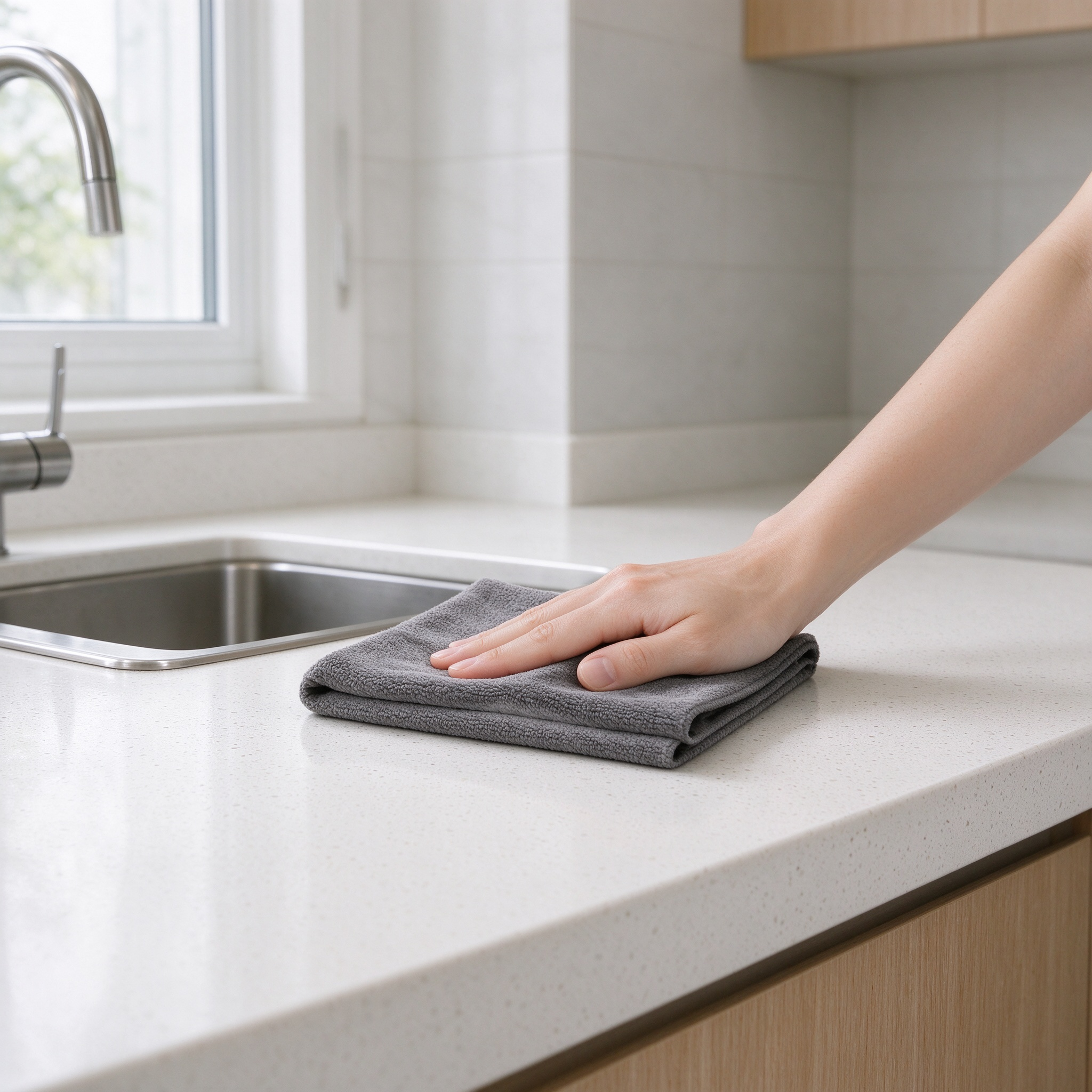
The kitchen is the highest-rotation cleaning environment in any home. Countertops, sinks, stovetops, appliances, and backsplashes accumulate grease, fingerprints, and food residue on a schedule that respects no one. This is also where disposable paper towels have historically done their heaviest lifting — and where their waste footprint is most concentrated.
A dense polyamide cloth changes the kitchen equation. Its absorbency handles spills before they spread, its abrasion resistance lifts baked-on residue without scratching stainless steel or ceramic, and its quick-drying structure means it is ready for the next use within hours rather than days. One cloth, properly managed, can cover a week of kitchen cleaning — the equivalent of several rolls of paper towels, at a fraction of the cost and none of the landfill burden.
There is also a hygiene argument that is often overlooked. Paper towels are frequently praised as "more sanitary" because they are single-use. But in practice, most households use a sheet, crumple it, and reach for another — while a well-maintained reusable cloth that is rinsed, wrung, and hung to dry between uses is demonstrably sufficient for everyday kitchen tasks. The industry is slowly catching up to what professional kitchens have known for decades: a good cloth, used correctly, outperforms a stack of disposables.
The Car: Cleaning Beyond the Kitchen
The automotive environment is a different kind of challenge entirely. Car interiors accumulate dust on dashboards, streaks on windows and mirrors, and grime in places designed for ergonomics, not cleaning. The average driver reaches for a paper towel — which leaves lint, tears at the edges, and dissolves on wet surfaces — or for a specialized microfiber, which works but adds another product to the collection.
The reusable cloth excels here because of its dual nature: thick enough to wipe down large surfaces like windshields and interior panels, yet fine enough to handle mirrors without streaking. For drivers who want one tool that lives in the glovebox and handles every surface from the rearview mirror to the cup holder, this is the practical answer. It also survives the conditions that kill ordinary cloths — heat, sunlight, and the occasional encounter with an industrial-strength cleaner.
The Screen: Safety for Electronics
Few cleaning tasks are more anxiety-inducing than wiping a screen. Phone displays, tablets, laptops, and televisions are coated with oleophobic layers that are easily damaged by aggressive chemicals and rough fabrics. This is where the cloth's construction becomes a genuine safety feature.
A dense, lint-free polyamide-polyester blend is precisely what display-cleaning professionals recommend: no paper fibers, no abrasive texture, no chemical residue when used dry or with a small amount of water. The same cloth that scrubbed the kitchen sink can, once rinsed and dried, safely remove fingerprints from a laptop display. That versatility is rare. It is the reason electronics-safe cloths command premium prices on their own — and it is the reason a truly multi-purpose cloth delivers disproportionate value to households that own more screens than sponges.
The Home: Dusting, Polishing, and the Finishing Touch
Finally, there is the broad territory of general household cleaning: furniture, tables, glass, baseboards, and everything in between. Traditional dusting requires a feather duster (which just moves dust around), a treated cloth (which leaves residue), or a paper towel (which tears and lints). A dense reusable cloth captures dust rather than redistributing it, polishes glass without streaks, and leaves wood surfaces clean without wax buildup.
For households that value a genuinely finished result — the kind of clean you can see in the light — this is the cloth that gets the job done in a single pass.
The Economics of Reuse: What the Math Actually Says
The environmental case for reusable cloths is well documented, but the financial case is often the one that actually changes behavior. Let us be concrete about the numbers.
The average American household spends roughly $210 per year on disposable paper towels — and that figure has been climbing with inflation. Over five years, that is more than $1,000 spent on a product that is used for minutes and then discarded. The typical kitchen paper towel is manufactured from virgin or recycled fibers, bleached, shipped, and sold for the privilege of being thrown away after a single use. It is, by almost any measure, one of the least efficient purchases a household makes.
Now consider the alternative: a pack of two reusable cloths, engineered from 80% polyamide and 20% polyester, built to survive hundreds of wash cycles. With proper care — a rinse after heavy use, a machine wash when needed, and a hang to dry — a single cloth can deliver months of service. The payback period is measured in weeks, not years. After that, the cloth is not a cost; it is a small machine that manufactures savings every single day.
This is the argument that resonates across income levels. Sustainability is a values proposition, but savings are a math proposition — and in 2026, households of every demographic are doing both calculations.
The Environmental Ledger: Facts Over Feelings
Let us put the environmental case in the terms that matter. The data is not anecdotal; it is structural.
According to widely cited industry and environmental data, producing the paper towels used in the United States consumes roughly 51,000 trees per day. Those towels generate an estimated 3.8 million tons of tissue and towel waste annually in the U.S. alone — and because used paper towels are contaminated and cannot be recycled, virtually all of it ends up in landfills or incinerators. The production of a single ton of disposable paper towels draws on approximately 17 trees and 20,000 gallons of water.
A reusable cloth inverts this ledger. Its manufacturing footprint is a one-time event. Its use phase requires only the water and energy of the laundry loads it rides in on — loads that are already running for other purposes, so the marginal cost is minimal. Its end of life, when it finally arrives after months or years of service, is a fraction of the disposables it replaced.
None of this requires moralizing. It is simply arithmetic with different units: trees, gallons, tons, dollars. And in every unit, the reusable cloth comes out ahead.
What This Cloth Is Not: A Buyer's Reality Check
Any honest product analysis must also say what the product is not. This cloth is not a replacement for every cleaning tool in existence — no product is. It does not replace a stiff-bristled brush for scouring grout, nor a dedicated glass cleaner for the most demanding streak-free requirements. It is, however, a replacement for the broad middle ground of everyday cleaning that currently relies on disposables: the spills, the dust, the fingerprints, the quick wipes that add up to dozens of paper towel sheets a week.
There is also the matter of the microfiber conversation. The cleaning industry has spent the past decade popularizing microfiber cloths, and more recently has begun grappling with the reality that conventional microfiber sheds plastic microfibers into waterways during washing. The response — across the industry — has been better construction, denser weaving, and guidance on washing practices that reduce shedding. A dense polyamide-polyester cloth, washed in a full load and air-dried rather than machine-tumbled, is the responsible way to enjoy the performance of synthetic cleaning textiles while minimizing fiber release. This is not a claim about this cloth being "plastic-free" — it is a claim about using the right tool, the right way, for as long as possible.
The point is honesty. Products that pretend to solve everything usually solve nothing. Products that define their territory clearly — and do their job exceptionally well within it — become the tools households actually reach for.
How to Make One Cloth Last: The Care Protocol
The durability of a cleaning cloth is not just a function of its material; it is a function of how it is treated. A few simple practices dramatically extend the life of a polyamide-polyester cloth:
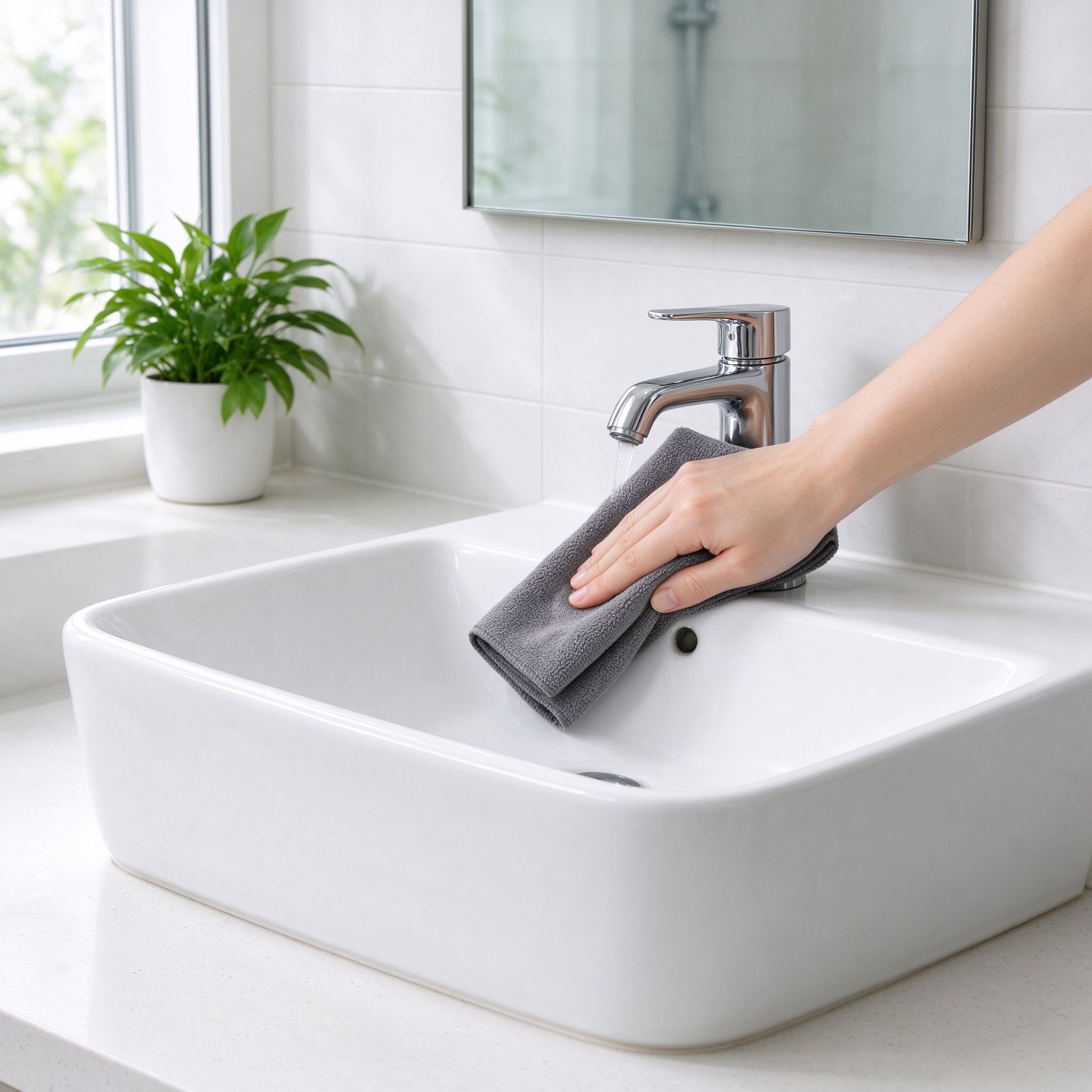
Rinse after heavy use. After cleaning greasy surfaces or spills, rinse the cloth under warm water before it dries. This prevents residue from setting into the fibers and keeps the cloth odor-free.
Machine wash with regular laundry. The cloth is built for the washing machine. Washing it with your regular load — rather than dedicating a special cycle — is both convenient and efficient, since the marginal water and energy cost is negligible.
Air-dry when possible. While the cloth can survive the dryer, air-drying is gentler on the fibers and further reduces any environmental impact. A dense cloth dries quickly; within hours it is ready for the next use.
Keep a rotation. With a two-cloth pack, one cloth can be in use while the other is in the wash — a system that eliminates the "waiting for the cloth to dry" problem and extends the working life of both.
These are not burdensome requirements. They are the habits of any household that has discovered the quiet satisfaction of owning fewer, better things.
Why 2026 Is the Tipping Point
It is worth pausing on the year itself, because timing is not incidental. 2026 sits at the intersection of several converging forces that make the reusable cleaning cloth a category whose moment has arrived.
First, consumer behavior has shifted permanently. The post-pandemic household is more hygiene-conscious, but also more cost-conscious — and the two pressures together favor tools that are effective and reusable. Second, the regulatory environment is moving in a clear direction: from EU directives on single-use plastics to tightening waste-reduction targets in the UK and beyond, the policy wind is against disposables and with reuse. Third, retail has responded. Reusable kitchen roll, washable cloths, and refill systems are no longer niche eco-boutique items; they are mainstream SKUs on the shelves of major grocery and home retailers. The infrastructure of habit — the way we shop, the way we think about cleaning — has already changed. Products like this cloth are not ahead of the curve; they are the curve.
None of this requires anyone to become an activist. It simply means that in 2026, choosing a reusable cloth over a roll of paper towels is not a statement. It is the sensible default.
Who This Product Is For
The profile of the ideal customer for this cloth is broader than the marketing stereotype suggests. It is the busy parent who cleans the kitchen twice a day and wants a tool that keeps up. It is the driver who wants one cloth for the car that handles windows, mirrors, and interior panels. It is the professional who wipes down screens and laptops and wants something safe on expensive electronics. It is the renter and the homeowner, the minimalist and the household manager, the sustainability-minded shopper and the budget-minded shopper — and increasingly, they are the same person.
The through-line is not ideology. It is efficiency. Every one of these users is looking for the same thing: a tool that works better, lasts longer, and costs less than what they are currently using. The reusable cloth delivers on all three, and it does so without requiring a change in lifestyle — only a change in the drawer.
The Verdict: Small Product, Structural Change
There is a temptation in consumer culture to assume that meaningful change requires dramatic action — a new house, a new system, a new philosophy. The reusable cleaning cloth is evidence that the opposite is often true. The most durable changes are the ones that slip into an existing routine and quietly outperform what they replace.
In 2026, the equation is simple enough for any household to verify. A dense, thick, super-absorbent cloth, engineered from 80% polyamide and 20% polyester, replaces a stream of disposable paper towels across the kitchen, the car, the screens, and the furniture. It cleans better, it costs less over time, and it removes hundreds of dollars and pounds of waste from the annual household ledger. The payback is measured in weeks. The compounding is measured in years.
The cleaning aisle has spent a century selling us convenience at the price of waste. The reusable cloth is the quiet correction — the product that asks us to buy fewer things and use them better. That is not a compromise. In 2026, it is the smarter way to clean.



